
project spaces
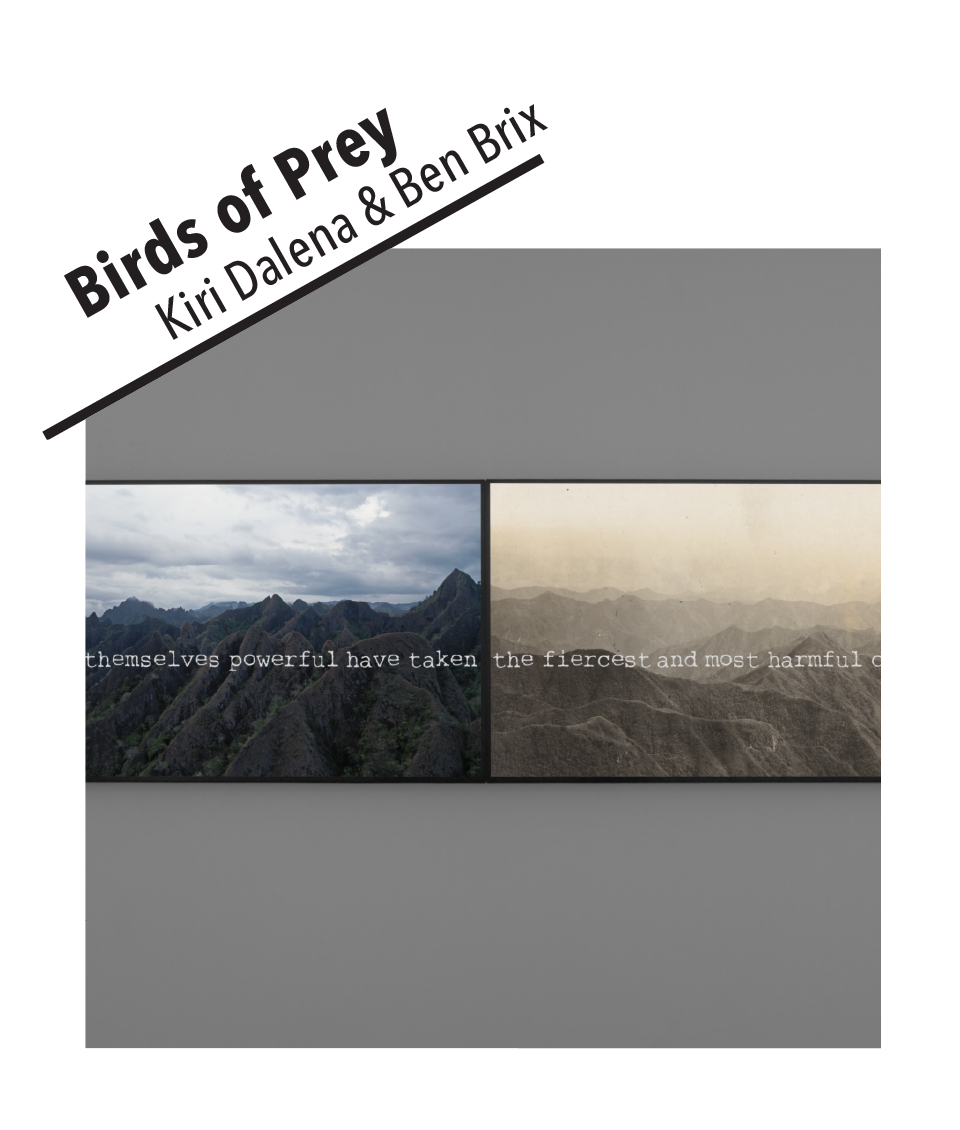
With the video installation "Birds of Prey" (2024), a more distant yet equally impactful chapter of Philippine history is explored: the US occupation from 1898 to 1946. The artists investigate this colonial legacy through a collection of over 3,500 photographs of the Filipino population produced between 1887 and 1907, meticulously organized by location and ethnicity. These images were compiled by Dean Worcester, Secretary of the Interior for the US colonial government in the Philippines from 1901 to 1913, who collected or commissioned the photographs to persuade the US public of the Filipino people’s supposed incapacity for self-governance. The majority of these images are frontal portraits, often of indigenous individuals, resembling mugshots that subject them to a pseudoscientific, racialized gaze. Worcester, previously a zoologist and ornithologist, cataloged the images in much the same way he might have with exotic birds. The video installation takes on an expanded approach by juxtaposing historical landscape photographs taken on behalf of the US colonial government with contemporary views of the Philippines, probing the often-unseen legacies of foreign occupation. These images are paired with text from the protest pamphlet, “Aves de Rapiña” (Birds of Prey), published in the daily newspaper El Renacimiento in 1908. This editorial sharply criticized the colonial government, warning readers through the biblical phrase “Mane, tecel, phares” (You have been weighed, you are found wanting, and your kingdom is divided) that their crimes will eventually be judged.